

Witnessing the Great Migration is not merely a sightseeing excursion; it is an immersion into one of the oldest and most complex survival dramas on Earth. For the uninitiated, the migration can look like chaos. However, for the informed traveler, it is a highly synchronized biological machine driven by rainfall, soil chemistry, and ancient instinct.
At Mamis Tours & Travels, we believe that the best safari experience belongs to the traveler who understands the “why” behind the movement. Here is a guide to wildebeest facts, behavior, and migration dynamics that will transform your perspective from a passive observer to an informed explorer.
In this guide
Why the Wildebeest Migrate
The blue wildebeest (Connochaetes taurinus) is often mischaracterized as a comical or unintelligent animal
Search for Phosphorus: One of the most critical wildebeest migration facts is that the movement is not random wandering. Wildebeests are hypersensitive to the mineral content in grass, specifically phosphorus and calcium. As the rains shift, the mineral concentrations in the grass change. The herd moves not just for water, but to graze on high-phosphorus soils necessary for lactation and skeletal growth..
Swarm Intelligence: Wildebeests do not have a single leader. Instead, they operate using “swarm intelligence.” This is a collective decision-making process where the herd reacts to the movements of nearest neighbors. If a few individuals sense rain or danger and change direction, the information ripples through the herd almost instantly. This allows them to react to threats like lions or leopards with fluid, synchronized evasion.
When the Wildebeest Migration Occurs
The Calving Season (January – March)
This occurs in the Southern Serengeti (Ndutu plains). In a synchronized biological feat, approximately 8,000 calves are born daily over a three-week period.
- Survival Fact: A wildebeest calf can stand within minutes of birth and run with the herd within an hour. This rapid development is crucial, as the calving season attracts the highest concentration of predators in Africa.
- Viewer Insight: This is the best time to see cheetahs and lions hunting, but also to witness the tender maternal instincts of the herd.
The Rut (May – June)
As the herd moves north toward the Western Corridor, the mating season (the rut) begins. This is a high-octane period where bulls establish temporary territories and spar violently to attract females. The noise is deafening—a constant chorus of grunts and moans—and the energy is frantic.
The River Crossings (July – October)
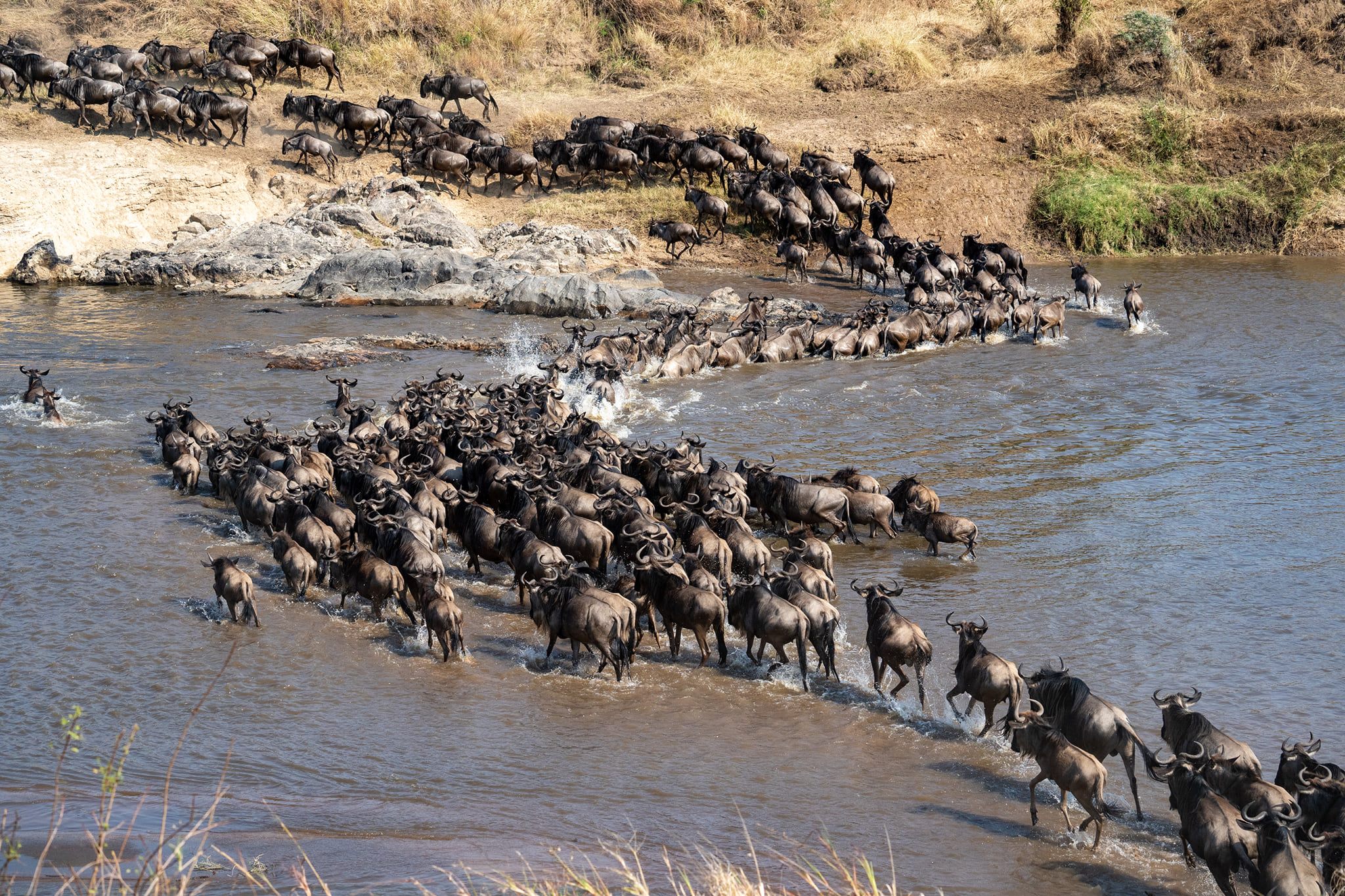
This is the most famous and dangerous chapter. The herds must cross the Grumeti and Mara Rivers to reach the grazing lands of the Masai Mara. This is where wildebeest safari tips regarding patience become vital (more on this below).
Wildebeest Migration Viewing Tips
To get the most out of your safari, you need to prepare for the reality of the bush. Here are expert wildebeest viewing tips from the team at Mamis Tours & Travels.
Respect the “Waiting Game”:If you are at the Mara River hoping for a crossing, bring a book and plenty of water. You might wait four hours for 20 minutes of adrenaline. Do not pressure your guide to drive closer. If the lead wildebeest senses a blockade or threat, they will turn back, and you will miss the spectacle entirely.
Look for the “Outliers”:While the massive herd is impressive, look at the edges. This is where the drama happens. Predators usually target the flanks of the herd. Watch for isolated animals or mothers separated from calves; this is where the emotional and raw survival stories unfold.