
If you’re planning a family trip to Kenya, you’re probably not losing sleep over whether there’s wildlife in Amboseli. You already know there is. What’s actually keeping you up is something more practical: will my child get bored, will they be safe, will the long drives wreck everyone’s mood, and is this actually worth the money?
Those are the right questions to ask — and this guide answers all four, plus shows you exactly which activities make Amboseli one of the most forgiving, kid-friendly safari destinations in Kenya.
Why Amboseli Is One of the Best Family Safari Destinations in Kenya
Not every safari park works well with children. Some require long, bumpy six-hour transfers just to reach the entrance. Amboseli is different, and that difference matters more than most travel blogs admit.
What makes it family-friendly:
- Open landscapes — Amboseli’s flat, semi-arid terrain means wildlife is visible from a distance without hours of tracking. Kids don’t have to wait quietly for 40 minutes hoping something appears.
- Shorter game drives — Because animals concentrate around the swamps and water points, game drives can be productive in 2–3 hours rather than dragging into exhausting all-day outings.
- Easy wildlife spotting — Elephants, in particular, are almost guaranteed. There’s no “we drove for hours and saw nothing” disappointment.
- Fewer exhausting transfers from the coast — Families travelling from Mombasa or Diani avoid the common routing problem of flying or driving back through Nairobi just to connect to a safari. A direct 3–4 hour road link means more time on holiday and less time in transit.
That last point is easy to overlook when you’re comparing parks, but it has a real effect on how a family trip feels. A tired, cranky transfer day at the start of a holiday colors everything that follows.
Is Amboseli Safe for Children on Safari?
This is usually the real question behind “is Amboseli good for kids,” so let’s answer it directly.
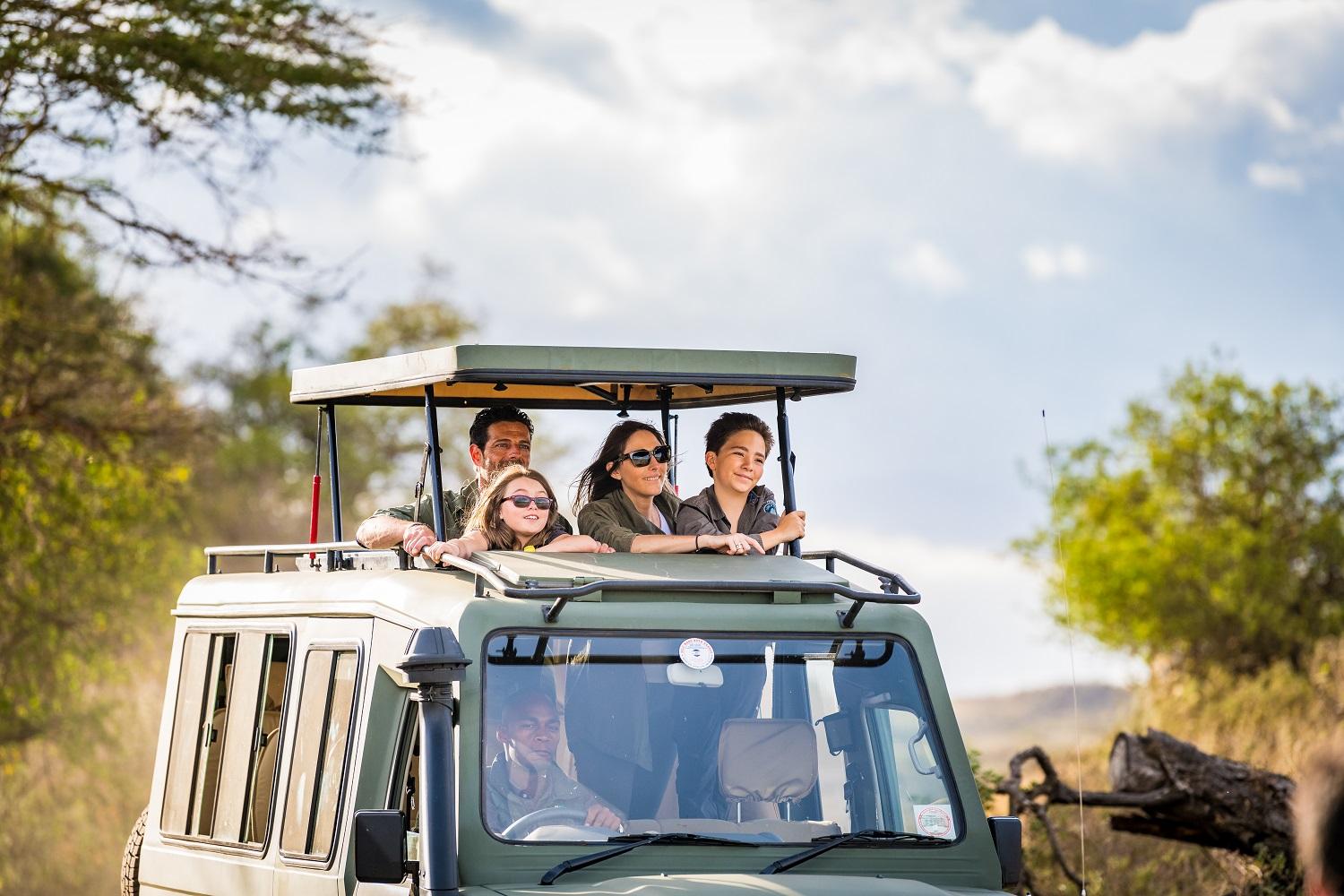
Vehicle safety: Reputable operators use safari vehicles with pop-up roofs, secure seating, and seatbelts suitable for children. Game drives are conducted at low speeds, and guides keep a safe, regulated distance from animals at all times.
Guide supervision: Experienced guides are trained to read animal behavior and prioritize calm, controlled viewing over getting close for the sake of a photo. A good guide will adjust the pace of a drive based on how the children in the vehicle are coping.
Lodge security: Most family-suitable lodges and camps in Amboseli have fenced perimeters, escorted movement after dark, and staff trained for child safety around open common areas.
Age suitability: Safari is generally considered safe for children of most ages, though comfort and engagement levels vary significantly by age bracket (more on this below).
In short: with the right operator and the right itinerary pacing, Amboseli is one of the safer and more manageable parks for a first family safari.
Best Age for Children to Visit Amboseli
Parents often ask this before anything else, because it shapes whether the trip is enjoyable or a struggle.
| Age Range | Suitability | Notes |
|---|---|---|
| 0–3 years | Challenging | Long drives and heat can be difficult; naps and feeding schedules are hard to maintain in a vehicle |
| 4–6 years | Manageable | Shorter drives work well; attention spans need games, snacks, and breaks |
| 7–12 years | Ideal | Old enough to engage with wildlife facts, challenges, and competitions; young enough to find everything exciting |
| Teens | Excellent | Can handle full game drives, photography, and cultural visits with genuine interest |
If your children fall in the 7–12 bracket, Amboseli is close to a best-case scenario for a first family safari.
7 Best Family Safari Activities in Amboseli
These aren’t just “things to do.” Each one is designed around what actually keeps children engaged on safari — short attention spans, the need for movement, and the appeal of a challenge or reward.
1. Junior Ranger Sunrise Game Drive
Instead of a generic early-morning drive, give kids a job. A wildlife checklist and an animal-spotting challenge turn passive viewing into an active mission — children are naturally drawn to “missions” the way adults are drawn to itineraries.
Keep these drives to 2–3 hours, not the full 6-hour marathon some operators default to. A shorter, high-energy drive beats a long one where kids check out halfway through.
2. Elephant Tracking Experience for Kids
Amboseli is one of the best places in Africa to see elephants up close, including some of the last “tuskers” — elephants with exceptionally large tusks. Rather than simply pointing them out, turn it into a lesson: elephant family structure, how to identify a matriarch, how to read footprints and behavior.

This reframes the experience from “we saw elephants” to “we learned how elephants live” — which is the kind of memory that sticks.
3. Kilimanjaro Photo Challenge
Amboseli’s single biggest visual asset is Mount Kilimanjaro rising in the background on a clear day. Most operators mention this in passing. Few turn it into something interactive.
Give kids a simple challenge: spot the mountain, a zebra, and an elephant silhouette in one frame. It turns photography from a parent’s task into a kid’s game — and produces far better family photos as a side effect.
4. Bush Breakfast Picnic
There’s something about eating outdoors, mid-safari, surrounded by open plains, that consistently ranks as a highlight for families — even more than the drives themselves. It’s novel, it’s unhurried, and it gives children a break from sitting in a vehicle.
For parents, it’s simply a good memory: no schedule pressure, just food and conversation with wildlife in the distance.
5. Maasai Cultural Learning Experience
Skip the generic “village visit” framing. Position it as a learning experience: traditional jumping displays, beadwork demonstrations, and storytelling from Maasai community members. Children engage far more with hands-on culture than with a guided walk-through.
This also gives parents an easy answer when asked, years later, “what did you learn in Kenya?”
6. Animal Spotting Competition
Turn the entire safari into a running competition. Kids compete to be first to spot a lion, zebra, giraffe, buffalo, and elephant — essentially Amboseli’s version of the Big Five hunt, scaled for children.
Award a Junior Explorer certificate at the end. It costs almost nothing to produce, but it becomes a keepsake — and a shareable one. Parents post these. That’s organic word-of-mouth you don’t have to pay for.
7. Safari Then Sea: Family Extension to Mombasa
This is where a Mombasa-based itinerary has a structural advantage over a Nairobi-routed one.
Most safari operators end the trip at the park gate. A coast-based itinerary continues the story:
- Day 1–2: Safari adventure in Amboseli
- Day 3 onward: Beach recovery on the Kenyan coast
For families specifically, this isn’t just a nice add-on — it’s a pacing strategy. Safari is stimulating and early-rising. Beach is slow and recovery-oriented. Putting them in that order, on one continuous route, lets the holiday build to a relaxing finish instead of ending on an exhausting transfer day.
Why Families Prefer Safari First, Beach Second
This sequencing isn’t arbitrary — it follows how energy and attention actually move over the course of a trip.
Safari first brings the excitement: early wake-ups, novelty, high stimulation, and the adrenaline of spotting wildlife. Children (and honestly, most adults) can sustain this kind of intensity for 2–3 days before fatigue sets in.
Beach second brings the recovery: slower mornings, no alarms, and open-ended afternoons. After a few days of 5:30 AM game drives, a beach stretch lets the whole family decompress before heading home.
Reversing the order rarely works as well — starting with beach relaxation, then asking tired, settled kids to wake up at dawn for game drives, tends to create friction rather than excitement.
Family Safari Package from Mombasa (No Nairobi Transfers)
If the activities above sound right for your family, here’s how they come together as an actual itinerary — without the wasted day that a Nairobi routing typically adds.
Little Explorers Amboseli Family Safari — 5-Day Safari + Sea Package
| Day | Itinerary |
|---|---|
| Day 1 | Mombasa → Amboseli (direct road transfer, 3–4 hours) |
| Day 2 | Morning and evening game drives, Junior Ranger activities |
| Day 3 | Kids’ activity morning (animal spotting competition, certificate ceremony), return to coast |
| Day 4 | Beach stay — Mombasa or Diani Beach |
| Day 5 | Beach stay, departure |
Designed around:
- Short attention spans (2–3 hour drives, not 6-hour marathons)
- Built-in rest breaks between activities
- Engaging, gamified wildlife viewing
- Safe, supervised experiences at every stage
- Fun, memorable learning moments — not just sightseeing
Nairobi Route vs. Direct Mombasa Route
| Via Nairobi | Direct from Mombasa | |
|---|---|---|
| Extra flight/drive segment | Yes | No |
| Approximate added transit time | 1 full day | None |
| Risk of child fatigue/meltdown | Higher | Lower |
| Continuous itinerary flow | Broken | Seamless |
Frequently Asked Questions
Yes, with a reputable operator using safety-equipped vehicles, experienced guides, and family-appropriate lodges. Pacing — shorter drives, built-in breaks — matters more than the park itself.
Children aged 7–12 typically get the most out of an Amboseli safari, though manageable, well-paced itineraries can work for children as young as 4.
Yes. From Mombasa or the south coast, Amboseli is roughly a 3–4 hour direct road transfer, allowing a safari-then-beach itinerary without a Nairobi routing or an extra transit day.
For children, 2–3 hour drives are generally more effective than full-day outings. Shorter, focused drives keep kids engaged rather than exhausted.
Planning a family safari from the Kenyan coast? Mamis Tours & Travel designs child-friendly Amboseli itineraries that combine wildlife adventure with relaxing beach time — without exhausting Nairobi transfers.